Tuesday, June 1, 2010

Day Two: Still HOT

We started off by visiting Hazor, the oldest Canaanite city in the country—it’s been occupied since 2500 B.C. and maybe even earlier than that.


Good relationship.


Bad relationship.


Are all the ruins starting to look the same to you, too?


After a long, hot hike to the top of a tel, what everyone needs is a visit to a refreshing spring, right? So, we went to Dan.


The rushing waters that flow into the Jordan—22.5 gallons per second!


I love the purple against the white petals.


The oldest gate—3,800 years old—from the time of Abraham. This was built 1,500 years before the Romans “invented” the arch. Ha!


We kinda look alike, huh?


Dipping my feet in the super cold spring—the headwaters of the Jordan. (Darn that half naked man in the background…NICK!)


Water literally flows out of the rocks.


Hello, Mr. Crab =)


See how fast the water is rushing? And Solomon is doing strange things in the water…who knows? *shrug*


After the cool visit to the springs at Dan, we went to Hades. Well, actually, it was Caesarea-Philippi, where there’s a cave with an abyss that the people believe leads to Hades. There are also lots and lots of pagan temples there, including one to dancing goats…


Alcoves for the dancing goat gods. Haha.


Jon wishes he were a dancing goat.


This was a really cool device that wrote Matthew 16:16 in five or six different languages in the sand when you rolled the pestle through it.


Our final stop of the day was the Golan Heights, from which we could see the Israeli-Syrian border and all sorts of neat old military get-ups.


And your destination of choice is…?


The horizontal road cutting across the picture (on the closer side of the green fields) is the Syrian border.


The UN buildings


“I shoot you!”


Monday, May 31, 2010

Entering Galilee

First day out in Galilee--and goodness, was it BLAZING hot! Our first stop was at Beth-She’an, where we oriented ourselves to some of the mountains in the region, saw the ruins of an Egyptian governor’s home, as well as the fantastic ruins of the Roman city of Schytopolis.


Canaanite art—or rather, a copy of a discovered piece. It’s actually made of Styrofoam. =/


The tree featured in the movie, “Jesus Christ, Superstar.”


Schytopolis


Me and Schytopolis


Schytopolis and an earthquake—no, really, I’m not kidding.


I’ve got my reading material for the ancient Roman public toilets.


Sometimes we struggle with the smiling.


There, that’s better!


A Roman sauna. They would place a floorboard over those stumps, and heat water underneath so the steam could rise.


Next, we went to Megiddo, the city most well known probably for its mention in the End Days of Revelation 16. But more than just for its apocalyptic significance, it was an important historical city as well, because it was the most direct route in the region. Therefore, possession was greatly contested by the kings of the surrounding nations.


It takes four Israelis and a machine to set one stone. And how long did it take them to build the wall of Jerusalem?


I think these are the first cows I've seen in Israel.


It was a sad day when I had to tell Jon he finally outgrew his beloved crib.


Aubrey told us she had a surprise for us on the way to our next stop. We were all hoping it was ice cream. Instead, it was this tomb.


At Mt. Carmel, we listened again to the profound story of Elijah vs. Jezebel's prophets of Baal.


For our last field study stop of the day, we stopped at a mountain peak right out outside of traditional Nazareth.


Mt. Moreh in the distance


The black domed church in the middle of the picture marks the traditional site of ancient Nazareth.


Looking across the valley at Mt. Tabor


Aubrey's husband, Vernon


I think they were doing a live broadcast to their church or something...


Standing on the ledge of the mountain where it is believed Luke 4:28-30 occurred. The Jews wanted to stone Jesus by throwing him off the cliff and dropping stones on him, but according to the biblical account, he just walked right through them. Tradition says that Jesus jumped off the cliff; therefore, they call the it the Leaping Mountain.


After the long day, we took a walk down to the Sea of Galilee, where it was surprisingly quite the bumpin’ boardwalk. Haha. We’ll have fun here, but first we have to survive the hot, hot days!


Sunday, May 30, 2010

Marketplace Enculturation

After an exhausting three days of hiking through the wilderness, we all were looking forward to a free day to catch up on reflection papers (or blog posts, for me) and rest. But, of course, being a member of Pat Blewett’s team, there is no such thing as boredom on a day off. So, out we went to the Garden tomb, the location a man named Gordon thought was Golgotha (where Christ was crucified and buried). It turns out he was mistaken, but the site has been nicely preserved to resemble more what Calvary would have looked like at the time, instead of the Church of the Holy Sepulchre (which is more likely the accurate spot).


The Hill of the Skull


The most apt description in the place


Dr. Blewett: faithfully orange. =P


Beth Moore was speaking at the Garden!


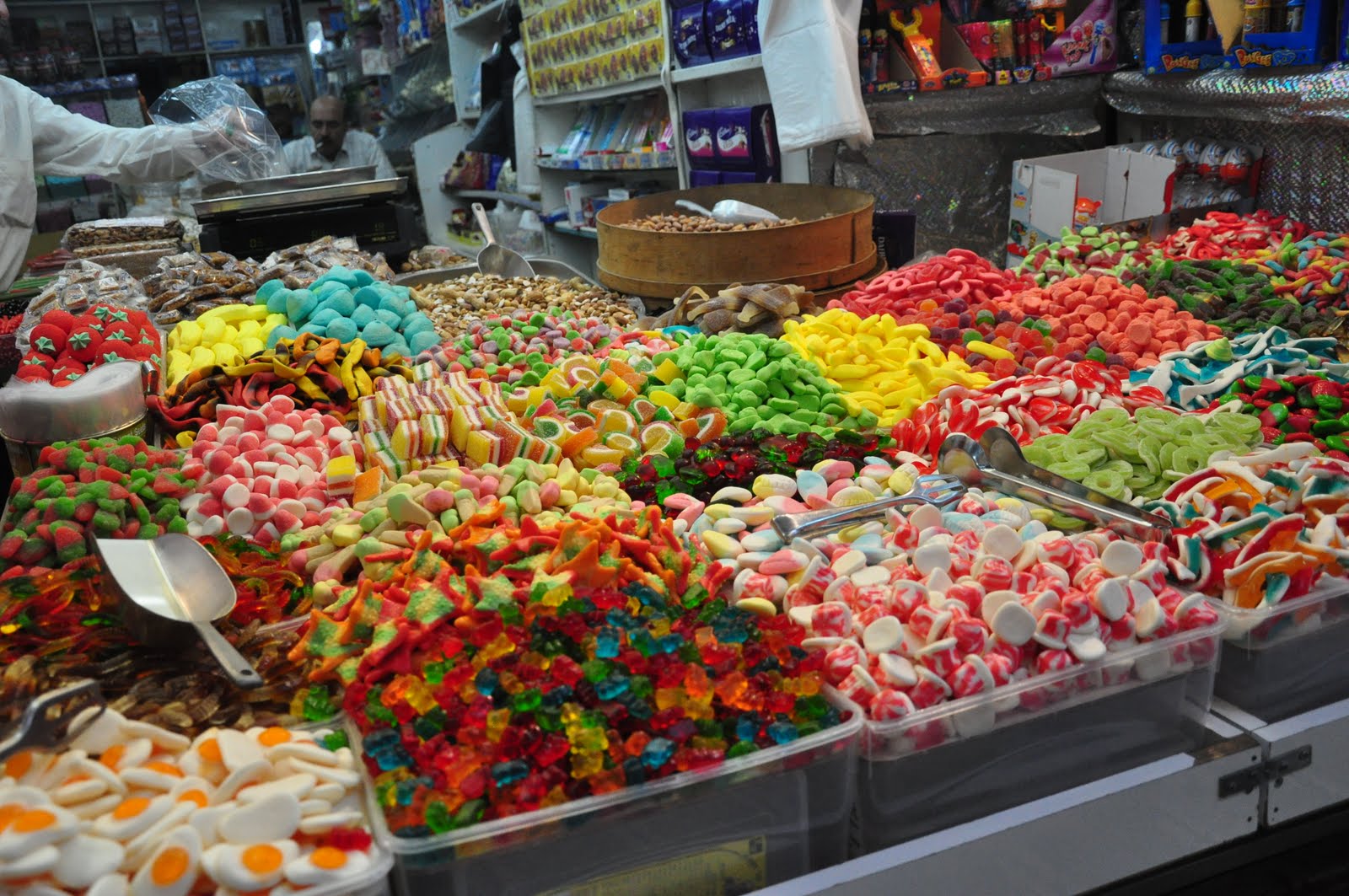
I also finally got some pictures from the market that we’re always walking through:


A garbage tractor


Some crazy drink vendor—I’m not really sure what it is.


Shops right inside the Damascus gate (the Arab side)


Pickled cauliflower?


My favorite: GUMMIES!!!


A spice tower—crazy huh?


"Hallo, Madam! Where are you from? Let's make a deal."


Baklava and other desserts in funny lighting


And, I’m not sure what that is actually, but it looks good.

You have to be fast when taking pictures in the market; otherwise, you just get shoved along in the flow of traffic. But these are just a few examples of typical market scenes that we pass by when we're in Jerusalem.